
BLOG FOR ENTREPRENEURS

Murphy Bova LLP Client - Pearl - Featured in Forbes
Meet 27-year-old Sam Asher. He’s so crazy about oysters, he invented an app called Pearl to help people like him find who’s serving up their favorites — in real time.
Meet 27-year-old Sam Asher. He’s so crazy about oysters, he invented an app called Pearl to help people like him find who’s serving up their favorites — in real time.

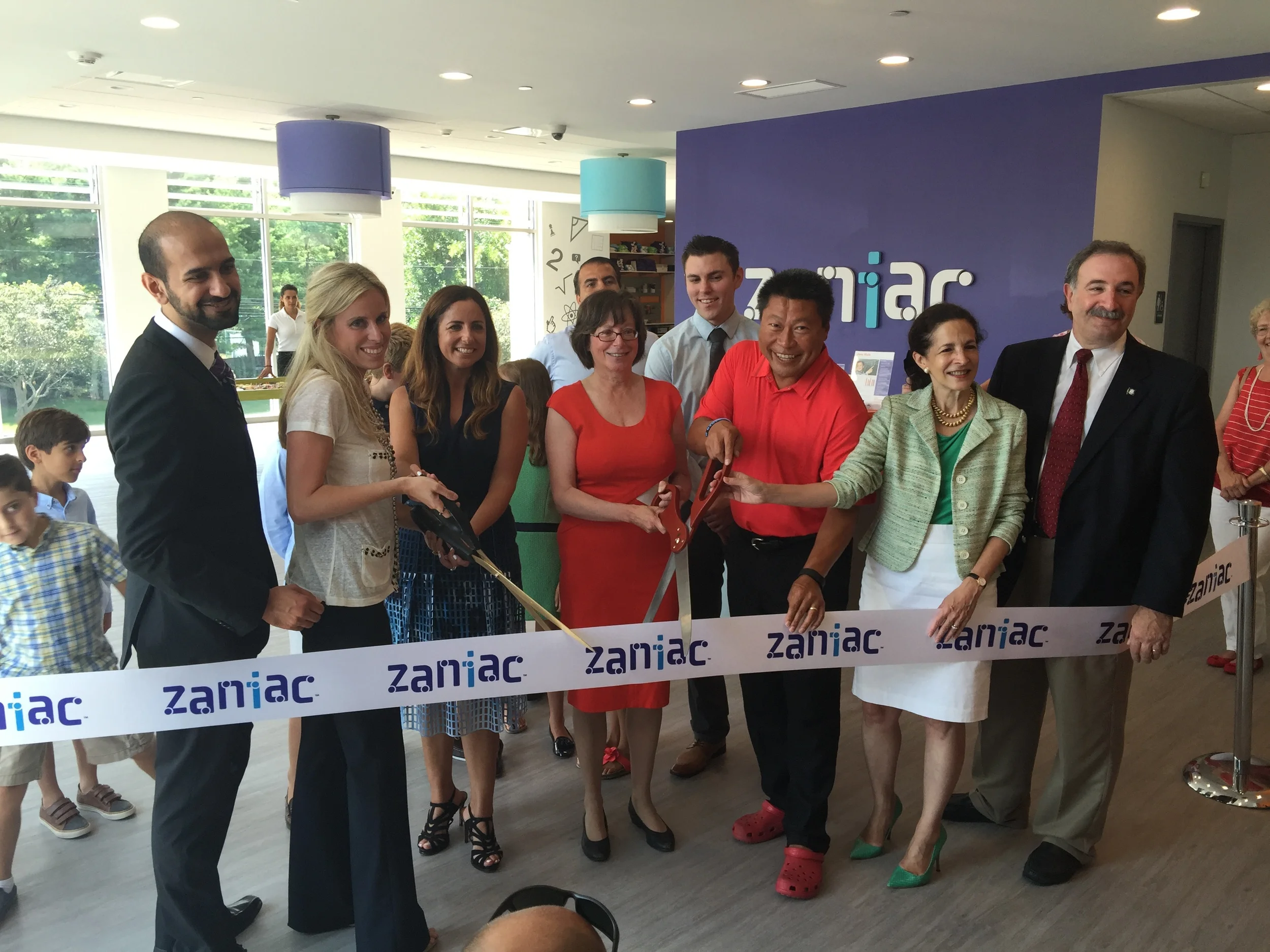
Congratulations Zaniac NYC on its Grand Opening!
Zaniac, an innovative K-8 after-school Science Technology Engineering Math (STEM) education enrichment franchise, yesterday celebrated the Grand Opening of its new campus on Manhattan’s Upper East Side.
From the new wire...
NEW YORK, NEW YORK (PRWEB) SEPTEMBER 02, 2015
Zaniac, an innovative K-8 after-school Science Technology Engineering Math (STEM) education enrichment franchise, yesterday celebrated the Grand Opening of its new campus on Manhattan’s Upper East Side. A ribbon-cutting ceremony was held at the new campus at 261 E 78th Street, between Second and Third Avenues.
Zaniac’s Upper East Side grand opening is a homecoming for Zaniac founder and franchisor Paul Zane Pilzer. Economist, college professor, social entrepreneur and New York Times best-selling author of 11 books, Pilzer received his MBA in 15 months from Wharton Business School and became Citibank’s youngest officer at age 22 and its youngest vice president at age 25. Mr. Pilzer was appointed a professor at New York University at age 24 where he taught for 21 years and was five times voted “best teacher.” He has served as an appointed economic advisor in two White House administrations and has started or taken public six companies in healthcare and K-12 education.
"My first apartment after college was on 79th Street right by where Zaniac Upper East Side is located,” said Professor Pilzer. “I left that apartment to go to Wharton where I developed the interactive teaching technology that grew into Zaniac. I never dreamed I'd be returning here 41 years later to help bring the incredible benefits of Zaniac K-8 Programs and Camps to children in my old neighborhood."
Zaniac is a national STEM (Science, Technology, Engineering and Math) franchise designed from the ground up to prioritize fun, to actively engage and integrate a multi-disciplinary approach to problem solving. The company provides a host of STEM learning programs that get K-8 kids excited about math and science while preparing them for 21st Century jobs, including Zaniac Robotics: LEGO®, Game-Based Learning: Minecraft™, 3D Printing, App Creation and Computer Programming.
The opening of the Manhattan campus is also a homecoming for franchisee owners Camilla Gazal and Flavia Naslausky who previously worked on Wall Street in the financial services industry. Both are graduates of New York University.
“We’re thrilled to be in New York City, the greatest city in the world! Bringing the Zaniac K-8 learning experience to Manhattan is a major move for us. We are confident this new location will be a big success and lead to expansion to other boroughs in the city,” said Gazal, who launched the first Zaniac franchise in Greenwich, CT two years ago with co-founder Naslausky.
“Our new location on the Upper East Side is ideal for our target market. We look forward to working with Manhattan’s public and private educational community to advance STEM education for K-8 students with programs that make learning math, technology, and other STEM fields of study fun and exciting," said Ms. Naslausky.
The Manhattan campus is the third location in the New York area. In August, Zaniac opened a new campus in Westport, CT which joined Zaniac’s Greenwich campus. Gazal and Naslausky are planning to open ten Zaniac campuses in the New York Metropolitan area over the next five years.
Zaniac has plans to have 50 campuses open nationwide by 2017.
For more information about Zaniac Upper East and the programs they will be offering, visit http://www.zaniaclearning.com/uppereast/
About Zaniac
Zaniac makes math, technology, and other STEM fields of study fun, helping K-8 kids to become engaged, develop confidence, and measurably improve their academic performance. Zaniac is like school at its best—an active, inspiring place filled with friends and friends-to-be. Zaniac, a division of Park City, Utah-based Zane Prep, is looking to expand its franchise nationwide. For more information, visit http://www.zaniaclearning.com.
Congratulations Zaniac Westport on its Grand Opening!
Zaniac is an innovative K-8 after-school enrichment franchise whose mission is to engage K-8 students around the world in supplemental science, technology, engineering, and math education - giving them the skills and motivation they need to create a better future.
Owners, and Murphy Bova LLP clients, Camilla Gazal and Flavia Naslausky are very excited to be opening the new Zaniac campus in Westport which builds on the success they've experienced in Greenwich over the past two years. A number of students who attend the Greenwich campus live in the Westport area. Westport is an outstanding community with a reputation for excellence in education.

Client Alert: First FTC Case Against ‘Deceptive’ Crowdfunding Ends in Settlement
In its first case involving crowdfunding, the Federal Trade Commission has taken legal action against the deceptive tactics of a project creator who raised money from consumers to produce a board game through a Kickstarter campaign, but instead used most of the funds on himself.
From FTC Website
______________________________________
Crowdfunding Project Creator Settles FTC Charges of Deception
Defendant Spent Backers’ Money on Personal Expenses
FOR RELEASE
June 11, 2015
In its first case involving crowdfunding, the Federal Trade Commission has taken legal action against the deceptive tactics of a project creator who raised money from consumers to produce a board game through a Kickstarter campaign, but instead used most of the funds on himself. The defendant has agreed to a settlement that prohibits him from deceptive representations related to any crowdfunding campaigns in the future and requires him to honor any stated refund policy.
Crowdfunding involves individuals and businesses funding a project or venture by raising funds from numerous people, often via dedicated online platforms. According to the FTC’s complaint, Erik Chevalier, also doing business as The Forking Path Co., sought money from consumers to produce a board game called The Doom That Came to Atlantic City that had been created by two prominent board game artists.
“Many consumers enjoy the opportunity to take part in the development of a product or service through crowdfunding, and they generally know there’s some uncertainty involved in helping start something new,” said Jessica Rich, Director of the FTC’s Bureau of Consumer Protection. “But consumers should able to trust their money will actually be spent on the project they funded.”
According to the FTC’s complaint, Chevalier represented in his Doom campaign on Kickstarter.com that if he raised $35,000, backers would get certain rewards, such as a copy of the game or specially designed pewter game figurines. He raised more than $122,000 from 1,246 backers, most of whom pledged $75 or more in the hopes of getting the highly prized figurines. He represented in a number of updates that he was making progress on the game. But after 14 months, Chevalier announced that he was cancelling the project and refunding his backers’ money.
Despite Chevalier’s promises he did not provide the rewards, nor did he provide refunds to his backers. In fact, according to the FTC’s complaint, Chevalier spent most of the money on unrelated personal expenses such as rent, moving himself to Oregon, personal equipment, and licenses for a different project.
Under the settlement order, Chevalier is prohibited from making misrepresentations about any crowdfunding campaign and from failing to honor stated refund policies. He is also barred from disclosing or otherwise benefiting from customers’ personal information, and failing to dispose of such information properly. The order imposes a $111,793.71 judgment that will be suspended due to Chevalier’s inability to pay. The full amount will become due immediately if he is found to have misrepresented his financial condition.
This case is part of the FTC’s ongoing work to protect consumers taking advantage of new and emerging financial technology, also known as FinTech. As technological advances expand the ways consumers can store, share, and spend money, the FTC is working to keep consumers protected while encouraging innovation for consumers’ benefit.
The Commission vote authorizing the staff to file the complaint and proposed stipulated order in federal court was 5-0. The case was filed in the U.S. District Court for the District of Oregon, Portland Division.
The @FTC will host a Twitter Chat with staff attorneys from the case today at 2 p.m. ET. Follow the conversation and submit questions using #AskFTC. Staff will be online for 60 minutes.
NOTE: The Commission files a complaint when it has “reason to believe” that the law has been or is being violated and it appears to the Commission that a proceeding is in the public interest. Stipulated orders have the force of law when approved and signed by the District Court judge.
The Federal Trade Commission works for consumers to prevent fraudulent, deceptive, and unfair business practices and to provide information to help spot, stop, and avoid them. To file a complaint in English or Spanish, visit the FTC’s online Complaint Assistant or call 1-877-FTC-HELP (1-877-382-4357). The FTC enters complaints into Consumer Sentinel, a secure, online database available to more than 2,000 civil and criminal law enforcement agencies in the U.S. and abroad. The FTC’s website provides free information on a variety of consumer topics. Like the FTC on Facebook(link is external), follow us on Twitter(link is external), and subscribe to press releases for the latest FTC news and resources.


The Newest Player in Early Stage Financing Rounds: the SAFE
Companies looking to raise early stage funds should seriously consider the Simple Agreement for Future Equity, or SAFE.
Companies looking to raise early stage funds should seriously consider the Simple Agreement for Future Equity, or SAFE. First announced by Y Combinator in late 2013, the SAFE is a simpler, faster tool for raising money than the convertible note structure which has been predominant in early round financing since 2010. Investors can fund through a SAFE, and in most cases there is no further action required until the SAFE automatically converts into true equity at the time the company closes its first round of equity financing. Crucially, the company can avoid setting a valuation when the SAFE investment is made (like with convertible debt). Typically, the company and its investors will only need to negotiate an appropriate valuation cap before closing a SAFE investment. Unlike convertible note financings, which require negotiation of interest rates and maturity dates (and potentially re-negotiations if the debt remains outstanding at the maturity date), and which often require the company to issue warrants and/or encumber its assets with a security interest, a SAFE should require less negotiation with investors. SAFE financings are done through a single agreement. They can be negotiated as larger multi-investor rounds, or as one-off agreements.
Given that the initial wave of SAFEs were closed in 2014, primarily on the West Coast, there has been some natural reluctance by investors to adopt this approach over the more established convertible debt financing or even a pre-seed/seed equity round. Companies can seek to entice any such cautious investors through conversion discounts (like with convertible debt), MFN clauses or other protections. As a general rule, SAFEs are adaptable instruments that can be customized to fit the company and its investors. In a similar vein, although SAFEs were designed primarily for Delaware corporations, an LLC or other entity (whether or not formed Delaware) can raise money through a SAFE.